
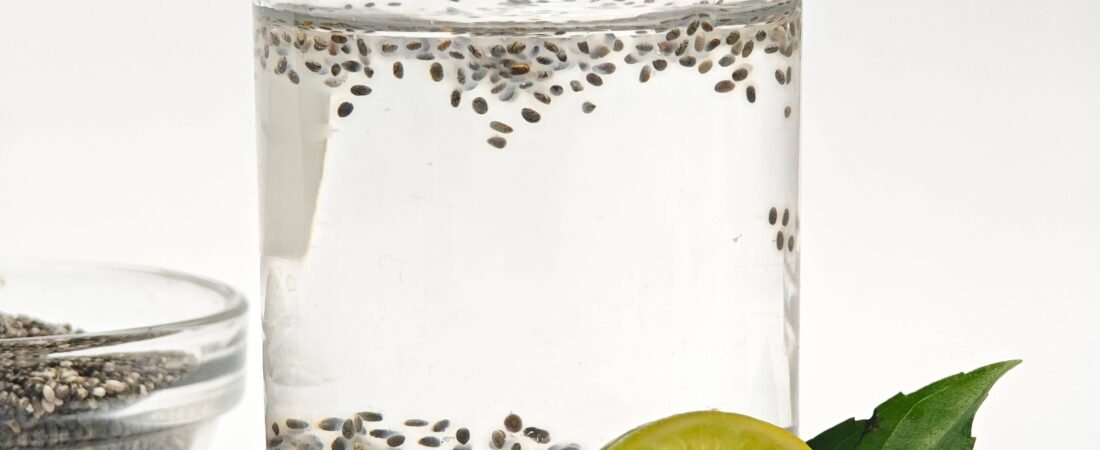
Chia seed water is simple until the seeds turn into a floating clump. The fix starts with enough water, a good stir and a second stir before the seeds settle together.
This chia seed water recipe gives you a practical starting ratio, an easy way to adjust the texture and a serving-size table for calories and fiber. You can keep it plain or add lemon, lime or berries.
How do you make chia seed water?
Stir 1 level tablespoon of chia seeds into 1½ cups (360 mL) of water. Stir again after a few minutes, then let the seeds hydrate for about 20–30 minutes, until evenly surrounded by gel. Add more water if needed and stir before drinking. New to chia? Try 1 teaspoon in the same amount of water for a lighter drink.
The texture matters more than an exact countdown: break up dry pockets and allow more soaking time if the seeds have not hydrated evenly.
Easy chia seed water recipe
Makes: 1 large glass · Active preparation: about 2 minutes · Soaking: about 20–30 minutes, or until evenly hydrated
Ingredients
- 1 level tablespoon chia seeds, approximately 12–14 g; weigh them if tracking nutrition
- 1½ cups (360 mL) drinking water, plus extra to thin
- Optional: 1–2 teaspoons lemon or lime juice
- Optional: ice, added after soaking
Use a glass or jar with enough space to stir without spilling. You do not need a blender, flavored powder or special bottle.
Method
- Pour in the water first. Sprinkle the chia seeds into the water while stirring, instead of tipping them into one mound.
- Stir thoroughly. Run the spoon around the bottom and sides to release any seeds sticking to the glass.
- Stir a second time after 2–3 minutes. Separate small clumps before they become larger gel-covered lumps.
- Let the seeds hydrate. Allow about 20–30 minutes, checking for even gel formation. Stir and wait longer if any dry pockets remain.
- Adjust and serve. Add citrus if using. Thin with a splash of water, stir again and add ice if you like.
Expect small seeds with a soft coating suspended in the water. Chia does not dissolve completely, so the finished drink will never have the texture of plain water.
Chia seed water ratio: start light, then adjust
A drinkable ratio is a preference, not a nutritional rule. More water changes thickness; it does not reduce the total fiber or calories if you consume all the seeds.
| Texture preference | Chia seeds | Water | Adjustment |
|---|---|---|---|
| Light introduction | 1 teaspoon | 360 mL | Keep this ratio if you prefer fewer seeds per sip. |
| Standard recipe | 1 tablespoon | 360 mL | Add water after soaking if thicker than you like. |
| More diluted | 1 tablespoon | 480 mL | Same seed portion, larger drink. |
How long should chia seeds soak?
For this drink, allow about 20–30 minutes and check the result. Harvard’s Nutrition Source describes gel formation in roughly 15–20 minutes for its thicker chia-gel preparation. Different ratios and clumping can change how evenly your mixture hydrates.[1]
If you want to prepare it overnight, cover it and refrigerate it. Give it a thorough stir the next morning and dilute it if necessary.
Chia seed water calories, fiber and protein
Plain water adds no calories. The nutrition comes from the amount of chia you use and any extras you add. Harvard’s approximate figures for 28 g of chia are 140 calories, 11 g of fiber and 4 g of protein.[1]
| Dry seed weight | Calories | Fiber | Protein |
|---|---|---|---|
| 4 g | 20 kcal | 1.6 g | 0.6 g |
| 12 g | 60 kcal | 4.7 g | 1.7 g |
| 14 g | 70 kcal | 5.5 g | 2.0 g |
| 28 g | 140 kcal | 11.0 g | 4.0 g |
Calculation: the source value × dry seed weight ÷ 28. These are rounded estimates, not laboratory results for this recipe. Spoon weights and food-composition values vary; use your package label and measured weight when precision matters. Citrus, milk, juice and sweeteners are not included.
For example, a glass made with 14 g of chia provides approximately 20% of the FDA’s 28 g Daily Value for fiber. That label reference is not a personalized intake target.[4] For more context, see how percent Daily Value works.
Check the serving before comparing recipes. A large bottle with a teaspoon of seeds can contain less fiber than a small glass with a tablespoon. Compare seed weights first, then account for the other ingredients. Foodmanac’s Mix Lab can help estimate a custom combination.
Three easy ways to flavor your glass
1. Lemon and mint
Add 1–2 teaspoons of lemon juice and a few washed mint leaves to the hydrated mixture. Taste before adding more lemon. Serve with ice if you prefer a sharper, colder drink.
2. Lime and cucumber
Add a squeeze of lime and several thin slices of washed cucumber. This is a mild option when you want some flavor without turning the drink into juice.
3. Mashed berry
Mash two washed strawberries or a small spoonful of raspberries, then stir them into the finished chia water. Leave the fruit pulp in if you enjoy the texture. It changes the nutrition slightly, so include it when logging the recipe.
Honey, syrup and sugar are optional flavor choices, not required ingredients. If you use them, measure the amount rather than assuming a small pour contributes nothing.
Why is my chia water clumpy or too thick?
| Problem | What to check | What to do |
|---|---|---|
| Floating clumps | Seeds may have hydrated together in a mound. | Separate with a spoon, stir thoroughly and allow more soaking time. |
| Seeds stuck at the bottom | The first stir may not have reached the base. | Scrape gently around the bottom and stir again. |
| Pudding-like texture | The amount of water may be low for your seed portion. | Add water gradually until drinkable. |
| Uneven texture between sips | The mixture may have settled. | Stir just before drinking and occasionally as needed. |
| You dislike the gel | The recipe may simply not suit your preferences. | Use chia in moist foods such as oats or yogurt instead. |
If you would rather eat your chia with breakfast, start with Foodmanac’s overnight oats guide. You do not need to enjoy a particular drink to build a varied diet.
What can chia seed water actually do?
It is a convenient way to consume fluid and a measured portion of seeds. Chia supplies fiber and plant-based omega-3 fat, including alpha-linolenic acid (ALA).[5] Those nutrients are useful; the drink does not need a dramatic health promise to justify making it.
Does it help with constipation?
Chia contributes fiber, which can support bowel regularity. However, increasing fiber too quickly can bring gas, bloating or constipation. Introduce it gradually and drink enough fluid.[2] It is not a guaranteed treatment or an instant “internal shower.”
Does chia seed water burn belly fat?
There is no basis for promising that this recipe will selectively burn belly fat. Houston Methodist notes that increased fullness does not automatically establish weight loss.[2] The seeds also contribute calories, as the table shows. Consider the whole eating pattern rather than treating one drink as a shortcut.
For more ways to vary your fiber sources, explore our high-fiber foods list. Beans, fruit, vegetables and whole grains can all have a place alongside seeds.
Safety and storage: what to know before drinking
Do not swallow a spoonful of dry chia seeds and chase it with water. The American College of Gastroenterology describes a case of seeds expanding and blocking the esophagus. People with swallowing difficulties or esophageal narrowing need particular caution.[3]
If you have a swallowing disorder, a prescribed low-fiber diet or a digestive condition requiring dietary restrictions, check with your clinician before trying the drink. Difficulty swallowing liquids or your own saliva requires urgent medical attention.[3]
Use a clean covered container. Houston Methodist recommends consuming prepared chia water within two hours or refrigerating it.[2] For this small-batch recipe, make what you plan to drink, or refrigerate overnight for the next day. Adding lemon does not make it shelf-stable.
Frequently asked questions
Do you drink the seeds or strain them out?
This recipe is intended to be consumed with the hydrated seeds. Straining them out means the nutrition table no longer describes what you drink.
Is morning the best time to drink chia water?
You do not need a special morning ritual. Choose a time that fits your meals and preferences. Houston Methodist suggests having it with food.[2]
Can I use more water without changing the nutrition?
Yes. If the seed weight stays the same and you drink the whole portion, adding plain water changes the volume and concentration, not the total calories or fiber.
Can I use milk instead?
Yes, but you are making a different drink or a pudding, depending on the ratio. Include the milk’s calories, protein and other nutrients when calculating the serving.
Why does my chia label show different calories?
Serving weights, rounding and the underlying nutrition data can differ. The figures here are estimates from a named reference. For your own portion, prioritize the label on your seeds and the weight you actually use.
Keep the recipe simple
Measure the seeds, give them enough water, stir twice and let them hydrate evenly. Start with a lighter portion if you are new to chia, then adjust the texture to your taste. Save the ratio table for your next glass.
Sources and nutrition notes
- Harvard T.H. Chan School of Public Health, The Nutrition Source: Chia Seeds — approximate nutrient baseline and gel preparation.
- Houston Methodist: Is Chia Seed Water Good for You? — gradual fiber increases, meal timing, limits of weight-loss claims and storage advice.
- American College of Gastroenterology: Esophageal Impaction With Chia Seeds — case-based swallowing safety guidance.
- US Food and Drug Administration: Daily Value on Nutrition and Supplement Facts Labels — fiber Daily Value.
- Harvard Health Publishing: Chia Seed Benefits — nutrient composition and ALA.
Nutrition estimates are for the specified ingredients and weights. This guide provides general food information and does not replace individualized medical advice.