
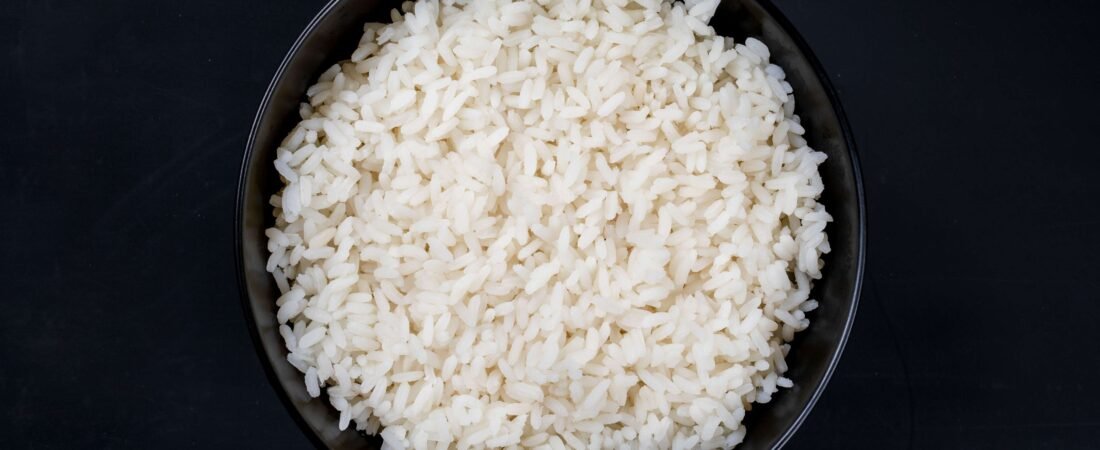
Rice calories can look confusing because cooked rice, dry rice, cups, bowls and restaurant servings are not the same measurement. A typical 100 g serving of plain cooked white rice provides about 130 calories, while one level US cup provides about 205 calories. The same 100 g weight of dry rice has roughly 365 calories because it has not absorbed cooking water.
This guide compares the portions people actually search for: 100 g, 150 g, 200 g, half a cup, one cup and one bowl. It also explains white rice, brown rice, basmati, jasmine, Japanese short-grain rice, seasoned sushi rice, sticky rice and Chinese fried rice. Values are rounded estimates based mainly on food-composition records; your package label or measured recipe should be used when exact tracking matters.
Quick Answer: How Many Calories Are in Rice?
Plain cooked white rice has about 130 calories per 100 g and about 205 calories per US cup. A common 150 g rice bowl has roughly 195 calories, while a larger 200 g bowl has about 260 calories.
- 100 g cooked white rice: about 130 calories
- 1/2 cup cooked white rice: about 100 calories
- 1 cup cooked white rice: about 205 calories
- 150 g bowl of cooked white rice: about 195 calories
- 200 g bowl of cooked white rice: about 260 calories
- 100 g uncooked white rice: about 360–370 calories
Reference: representative plain cooked and uncooked white-rice records in USDA FoodData Central. Water absorption, grain variety and cooking method change the weight of a cup or bowl.
Rice Calories by Serving Size
The most reliable comparison begins with grams. Cups and bowls are useful in a kitchen, but they can be loosely filled, tightly packed or different sizes. The following table uses plain cooked white long-grain rice at approximately 130 calories per 100 g.
| Serving | Approximate cooked weight | Calories | Carbohydrate |
|---|---|---|---|
| 1 tablespoon | 10–12 g | 13–16 kcal | 3–3.5 g |
| 1/4 US cup | About 40 g | About 52 kcal | About 11 g |
| 1/2 US cup | About 79 g | About 103 kcal | About 22 g |
| 3/4 US cup | About 119 g | About 155 kcal | About 34 g |
| 1 US cup | About 158 g | About 205 kcal | About 45 g |
| Small bowl | About 100 g | About 130 kcal | About 28 g |
| Japanese-style bowl | About 150 g | About 195–230 kcal | About 42–51 g |
| Large bowl | About 200 g | About 260 kcal | About 56 g |
| Takeout portion | About 300 g | About 390 kcal | About 85 g |
The Japanese-style bowl is shown as a range because short-grain rice records often fall around 130–153 calories per 100 g. Kikkoman describes approximately 150 g of steamed rice as a common bowl portion in Japan. A restaurant bowl can be smaller or considerably larger.
Cooked vs Uncooked Rice Calories: Why the Numbers Look So Different
Cooking does not create hundreds of extra rice calories. Rice absorbs water, so the cooked grains weigh much more. That is why 100 g of cooked rice has far fewer calories than 100 g of dry rice.
Imagine cooking 100 g of dry white rice containing about 365 calories. Depending on the variety and water absorbed, it may produce roughly 250–300 g or more of cooked rice. The whole plain batch still contains approximately the calories that were in the dry rice; those calories are simply spread across a heavier, water-rich food. Small differences can occur if starch is washed away or cooking water is drained.
| Dry rice | Approximate calories before cooking | Possible cooked yield | Important note |
|---|---|---|---|
| 50 g dry | About 180–185 kcal | About 125–150 g | Water and grain type affect yield. |
| 75 g dry | About 270–275 kcal | About 190–225 g | A common dry serving on some labels. |
| 100 g dry | About 360–370 kcal | About 250–300 g | Do not log this as 100 g cooked. |
| 150 g dry | About 540–555 kcal | About 375–450 g | Often enough for several side servings. |
The easiest tracking rule
If you weigh rice before cooking, use a dry-rice nutrition entry. If you weigh it after cooking, use a cooked-rice entry. Do not weigh cooked rice and apply the calories listed for dry rice.
When cooking for several people, another accurate method is to total the dry rice and all calorie-containing ingredients, weigh the finished batch, and divide the total by the portion weight. Foodmanac’s Mix Lab can help total the ingredients in a homemade rice dish.
Calories in White, Brown, Basmati, Jasmine, Sushi and Other Rice
Plain cooked rice varieties are often closer in calories than people expect. The biggest differences usually come from water absorption, serving weight and added ingredients—not the name printed on the bag.
| Rice type | Calories per 100 g cooked | What changes the number? | Common cuisines or uses |
|---|---|---|---|
| White long-grain rice | About 130 kcal | Water ratio and enrichment | Global side dishes, bowls and meal prep |
| Brown long-grain rice | About 120–125 kcal | Water absorption and cooking time | Whole-grain bowls and side dishes |
| Basmati rice | About 120–140 kcal | Brand, grain age and water ratio | Indian, Pakistani, Persian and Middle Eastern dishes |
| Jasmine rice | About 125–140 kcal | Brand and how softly it is cooked | Thai, Vietnamese and Southeast Asian dishes |
| Japanese short-grain rice | About 130–153 kcal | Cultivar and cooked water weight | Gohan, donburi and onigiri |
| Sushi rice, plain | About 130–153 kcal | Short-grain record used | Sushi, chirashi and poke-style bowls |
| Sushi rice, seasoned | Often above plain rice | Sugar in the vinegar seasoning | Nigiri, maki and sushi bowls |
| Glutinous or sticky rice | About 125–170 kcal | Variety, water and sweet or savory additions | Chinese, Thai, Lao and Southeast Asian dishes |
| Wild rice | About 100–105 kcal | It absorbs substantial water | North American grain bowls and blends |
| Fried rice | About 170–250+ kcal | Oil, egg, meat, sauce and water content | Chinese and other Asian restaurant styles |
These are practical ranges, not a claim that every cultivar or recipe is identical. Use the exact food record or package label for a precise entry. You can also use Foodmanac Compare Foods to compare rice records on the same 100 g basis.
White rice calories
Plain cooked white long-grain rice provides about 130 calories per 100 g. A 158 g US cup contains about 205 calories. White rice has very little fat unless oil, butter or another fat is added during or after cooking.
Brown rice calories
Cooked long-grain brown rice commonly provides about 120–125 calories per 100 g. A cup can contain roughly 215–245 calories because cooked cup weights differ by source and how the cup is filled. Brown rice is not dramatically lower in calories than white rice, but it generally provides more fiber.
Basmati rice calories
Cooked basmati rice usually falls around 120–140 calories per 100 g. One cooked cup often lands near 190–220 calories, but the package may use a dry serving instead. Basmati used in biryani or pilaf can contain much more energy after oil, ghee, meat and other ingredients are included.
Jasmine rice calories
Plain cooked jasmine rice often contains around 125–140 calories per 100 g, making a typical cup roughly 200–240 calories depending on its weight. Coconut jasmine rice is a separate dish: coconut milk, oil or sugar can raise the total substantially.
Japanese Rice Calories: Gohan, Sushi Rice, Onigiri and Donburi
Japanese meals commonly use short-grain Japonica rice. It becomes soft and cohesive after cooking, which makes it suitable for eating with chopsticks, forming onigiri and preparing sushi. Short-grain rice is not automatically higher in calories than every long-grain rice; the weight and seasoning still matter most.
Kikkoman’s Japanese food glossary describes about 150 g of steamed white rice as a common bowl portion and notes that rice becomes roughly 2.1–2.3 times heavier after cooking. Using representative cooked short-grain values, a plain 150 g bowl of Japanese rice contains approximately 195–230 calories.
| Japanese rice serving | Typical rice amount | Estimated rice calories | What else counts? |
|---|---|---|---|
| Small bowl of gohan | 100 g cooked | About 130–153 kcal | Plain rice only |
| Standard bowl of gohan | 150 g cooked | About 195–230 kcal | Furikake or sauces add more |
| Large bowl of gohan | 200 g cooked | About 260–306 kcal | Measure large restaurant bowls |
| Plain onigiri | 100–120 g rice | About 130–184 kcal | Filling and mayonnaise add calories |
| Rice beneath one nigiri | About 18–22 g rice | About 23–34 kcal | Add fish, sauce and seasoning |
| Rice in one maki roll | Often 90–140 g rice | About 117–214 kcal | Fillings can change the roll greatly |
Is sushi rice higher in calories?
Plain cooked sushi rice is simply short-grain rice. Prepared sushi rice usually receives rice vinegar, sugar and salt. Vinegar and salt contribute little or no energy in typical amounts, but sugar adds calories. That means the final number depends on the restaurant or recipe rather than a universal “sushi rice” value.
A simple tuna or salmon roll and a tempura roll with spicy mayonnaise may contain similar amounts of rice but very different total calories. To estimate sushi accurately, count the seasoned rice, fish, avocado, cream cheese, tempura coating, mayonnaise and sauces—not just the rice.
Donburi and curry rice
A donburi bowl often starts with 200–300 g of cooked rice, or roughly 260–459 calories before toppings. Beef, chicken, egg, tempura and sauce then determine the final total. Japanese curry rice also includes a thick curry sauce and may include breaded fried meat, so it should not be logged as plain rice.
Chinese Rice Calories: Steamed Rice, Fried Rice and Congee
Chinese rice dishes range from plain steamed rice to oil-rich fried rice, rice porridge and full meal sets. Calling all of them “one bowl of rice” hides the ingredients that create the calorie difference.
Chinese steamed white rice
A cup of plain steamed white rice is usually close to 205 calories when it weighs about 158 g. A restaurant container holding two cups would provide about 410 calories before any meat, vegetables or sauce. Always check how many cups or grams the container actually holds.
Chinese fried rice calories
Generic databases often place one cup of restaurant-style Chinese fried rice around 240–350 calories. The range is wide because recipes use different amounts of oil, egg, meat and sauce, and a “cup” can weigh differently.
A Hong Kong Centre for Food Safety laboratory study found that sampled fried-rice restaurant units averaged 1,300 calories per unit, with 32% of their energy coming from fat. That figure does not mean every cup has 1,300 calories. It shows how large restaurant portions and cooking oil can turn a multi-cup order into a much higher-calorie meal. In a matched meal comparison, the fried-rice version was higher in energy and fat than the steamed-rice version.
| Ingredient or change | Typical calorie effect | Practical tracking method |
|---|---|---|
| 1 teaspoon cooking oil | About 40 kcal | Count the amount used for your share of the batch. |
| 1 tablespoon cooking oil | About 120 kcal | Restaurant wok cooking may use more than expected. |
| 1 large egg | About 70–80 kcal | Divide by the number of portions. |
| Chicken, pork, beef or shrimp | Varies by type and amount | Weigh or use the restaurant nutrition listing. |
| Soy sauce and seasoning | Usually modest calories | Sodium can still rise significantly. |
| Sugary or oily sauce | Can add meaningful calories | Count it separately instead of calling it seasoning. |
Congee calories
Congee contains much more water than steamed rice, so it is usually lower in calories for the same bowl volume. The Hong Kong study reported an average of 260 calories per sampled congee restaurant unit, but toppings and bowl size varied. Pork, preserved egg, fried dough, peanuts and oil can raise the total.
Rice Nutrition Facts: Carbs, Protein, Fat and Fiber
Rice is primarily a carbohydrate food. Plain rice naturally contains very little fat, and it provides a small amount of protein. Fiber depends on whether the bran remains and on the exact variety.
| Nutrient | White long-grain rice | Brown long-grain rice | Wild rice |
|---|---|---|---|
| Calories | About 130 kcal | About 123 kcal | About 101 kcal |
| Carbohydrate | About 28.2 g | About 25.6 g | About 21.3 g |
| Protein | About 2.7 g | About 2.7 g | About 4.0 g |
| Fat | About 0.3 g | About 1.0 g | About 0.3 g |
| Fiber | Less than 1 g | About 1.6 g | About 1.8 g |
Representative values are rounded from USDA food-composition records. Enriched white rice may contain added iron and B vitamins. Food variety, fortification and preparation can change the complete nutrient profile.
How many carbs are in a cup of rice?
One 158 g cup of cooked white long-grain rice provides about 45 g of carbohydrate. A half cup provides about 22 g. Brown rice is still a carbohydrate-rich food; its main nutritional distinction is more fiber and retention of the bran and germ, not an absence of carbs.
Is rice gluten-free?
Plain rice is naturally gluten-free. However, flavored rice mixes, sauces and restaurant dishes can contain wheat-derived ingredients or cross-contact. People who must avoid gluten should check labels and ask the restaurant about preparation.
White Rice vs Brown Rice: Which Has Fewer Calories?
Brown rice is sometimes slightly lower in calories per 100 g cooked, but the difference is small and can disappear when cup weights differ. A better comparison considers fiber, micronutrients, taste, digestion, preparation and the rest of the meal.
- White rice: softer, quicker to cook, lower in fiber and often enriched in some countries.
- Brown rice: retains the bran and germ, has more fiber and usually takes longer to cook.
- Both: provide mostly carbohydrate and can fit into varied eating patterns.
The World Health Organization recommends that carbohydrates come primarily from whole grains, vegetables, fruits and pulses. That supports choosing brown rice or other whole grains often, while it does not make every serving of white rice a bad food. Culture, affordability, tolerance and the complete meal also matter.
Can rice fit a weight-loss diet?
Yes. Weight change depends on the broader balance between energy intake and energy use, not whether one food appears in the diet. Rice portions are easy to underestimate, particularly in restaurant bowls. Measuring a half cup, one cup or gram weight can make the meal easier to track.
A practical plate can combine a measured rice portion with vegetables and a protein source such as fish, chicken, tofu, lentils, beans or eggs. This changes the complete nutrition and may make the meal more satisfying than eating a large bowl of plain rice alone.
What about blood sugar?
Rice type, portion size, cooking, meal composition and the individual all affect the blood-glucose response. Brown rice contains more fiber than white rice, but people with diabetes or another medical condition should use their clinician’s personalized guidance rather than a universal internet portion.
How to Calculate Calories in Any Rice Portion
Use the calorie value that matches your rice type and whether it was weighed dry or cooked.
Formula: grams eaten × calories per 100 g ÷ 100
Example: 180 g cooked white rice
180 × 130 ÷ 100 = 234 calories
Example: 250 g cooked white rice
250 × 130 ÷ 100 = 325 calories
Example: a homemade fried-rice batch
- Record the dry rice, oil, eggs, meat, vegetables and sauces.
- Add all ingredient calories.
- Weigh the entire cooked batch.
- Divide total calories by total cooked grams.
- Multiply that value by the grams in your serving.
For example, if a finished batch contains 1,600 calories and weighs 1,000 g, it contains 1.6 calories per gram. A 250 g serving would contain about 400 calories.
For a database-assisted estimate, search the exact preparation in Foodmanac’s food catalogue. Compare similar rice records with Compare Foods, or combine your recipe ingredients in Mix Lab. Foodmanac explains its handling of sources, missing values and preparation differences on the methodology page.
Common Rice-Calorie Mistakes
- Using the dry value for cooked rice. This can make a cooked portion appear almost three times higher than it is.
- Assuming every cup weighs the same. Short-grain, long-grain, tightly packed and loosely filled cups differ.
- Logging fried rice as steamed rice. Oil, egg, meat and sauces belong in the total.
- Ignoring restaurant portion size. One container may hold two or three cups.
- Calling seasoned sushi rice plain rice. Sugar in sushi seasoning adds energy.
- Counting only the rice in a mixed dish. Curry, biryani, donburi, poke and rice bowls include other ingredients.
- Treating rinsing as a calorie-removal method. Rinsing changes surface starch and texture more reliably than it changes the total energy of the portion.
Rice Safety: Cool and Store Cooked Rice Properly
Cooked rice can be involved in foodborne illness when it is held without adequate refrigeration. The US Food and Drug Administration identifies boiled and fried rice among foods involved in past Bacillus cereus outbreaks.
Serve cooked rice promptly or cool it quickly and refrigerate it according to local food-safety guidance. Keep leftovers cold, avoid leaving a pot at room temperature for long periods, and reheat leftovers thoroughly. Do not rely only on smell to decide whether improperly stored rice is safe.
Should You Worry About Arsenic in Rice?
The FDA states that rice tends to absorb arsenic more readily than other crops, but it also says consumers can eat rice as part of a well-balanced diet. A sensible response is variety rather than panic: rotate rice with oats, quinoa, barley, corn, potatoes and other grains or starches when appropriate.
For infants and young children, follow current pediatric and public-health advice. The FDA notes that infant rice cereal does not need to be the first or only cereal. This article is general education and is not personalized medical or infant-feeding advice.
Frequently Asked Questions About Rice Calories
How many calories are in one cup of cooked rice?
One US cup of plain cooked white long-grain rice, weighing about 158 g, contains approximately 205 calories. Cup weights and rice varieties differ, so another cup may be closer to 190–240 calories.
How many calories are in 100 g of cooked rice?
Plain cooked white rice generally contains about 130 calories per 100 g. Cooked brown rice commonly contains about 120–125 calories per 100 g.
How many calories are in 200 g of cooked rice?
Using 130 calories per 100 g, 200 g of plain cooked white rice contains about 260 calories. Oil, butter, coconut milk or sauce must be counted separately.
Why does uncooked rice have more calories than cooked rice?
Dry rice contains very little water. During cooking it absorbs water and becomes heavier, so 100 g of cooked rice contains more water and less dry rice than 100 g uncooked.
How many calories are in a bowl of Japanese rice?
A plain 150 g bowl of Japanese short-grain rice contains approximately 195–230 calories, depending on the rice record and water absorbed. Larger donburi bowls can contain much more rice.
How many calories are in sushi rice?
Plain cooked short-grain rice commonly has about 130–153 calories per 100 g. Prepared sushi rice may be higher because sugar is added to the vinegar seasoning. A complete sushi roll also includes fillings and sauces.
How many calories are in Chinese fried rice?
One cup of Chinese restaurant-style fried rice often falls around 240–350 calories, but oil, egg, meat and serving weight create a wide range. Large takeout orders can contain several cups.
Is brown rice lower in calories than white rice?
Brown rice can be slightly lower per 100 g cooked, but the difference is small. Brown rice’s clearer distinction is that it generally contains more fiber because the bran and germ remain.
Does washing rice remove calories?
Rinsing removes surface starch and debris and can change texture, but it should not be treated as a dependable way to remove a meaningful number of calories. Track the dry amount or cooked portion instead.
Is rice high in calories?
Cooked rice has a moderate calorie density because much of its weight is water. Portions become calorie-heavy when they are large or contain substantial oil, ghee, coconut milk, sugar, fried toppings or rich sauces.
The Bottom Line
Plain cooked white rice contains about 130 calories per 100 g, 205 calories per US cup and 260 calories per 200 g bowl. Dry rice looks much higher per 100 g because it has not absorbed water. Brown, basmati, jasmine and Japanese short-grain rice usually sit in a fairly narrow range when compared in the same cooked gram amount.
The largest jumps come from portion size and additions. Seasoned sushi rice includes sugar; Chinese fried rice can include substantial oil, egg and meat; biryani, pilaf, coconut rice and restaurant bowls are complete recipes rather than plain rice. Match the food description, preparation and measurement before logging it.
Sources and Data Notes
- USDA FoodData Central — food-composition records for white, brown, short-grain and wild rice.
- Hong Kong Centre for Food Safety: Nutrient Values of Indigenous Congee, Rice and Noodle Dishes — laboratory analysis and comparison of steamed and fried rice dishes.
- Kikkoman: Japanese White Rice Glossary — Japanese serving and cooking context.
- World Health Organization: Healthy Diet — current general guidance on carbohydrate sources and whole grains.
- US Food and Drug Administration: What You Can Do to Limit Exposure to Arsenic — balanced-diet and grain-variety guidance.
- US Food and Drug Administration: Bacillus cereus — food-safety background including boiled and fried rice.
- Foodmanac Methodology — how Foodmanac handles food records, sources, preparation and missing values.
Nutrition values are rounded for readability and are educational estimates, not personalized dietary advice. Rice cultivar, brand, enrichment, recipe, water absorption and serving weight can change the result. For an exact packaged food, use its current label.