
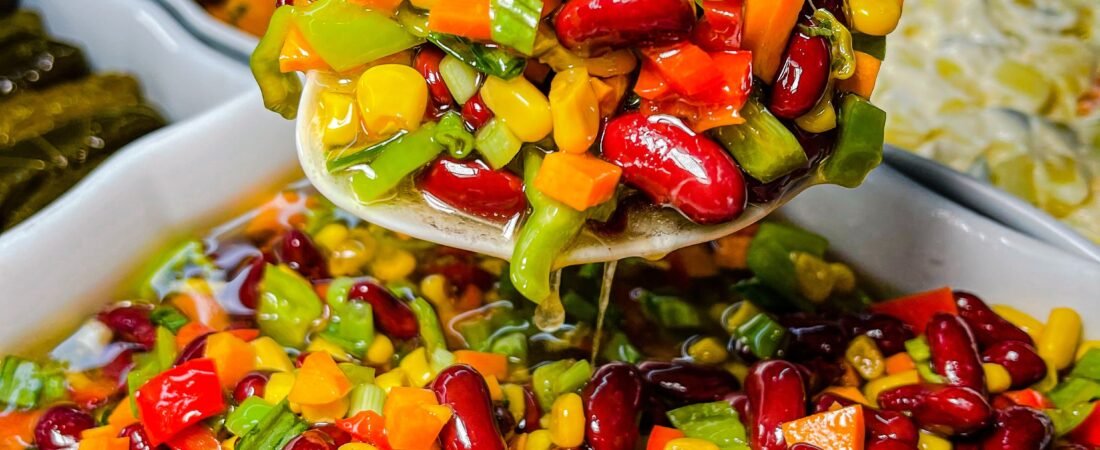
Dense bean salad might have started as a viral food trend, but there is a very practical reason people keep making it: it solves one of the most annoying meal-prep problems.
You know the feeling. You prepare a beautiful leafy salad on Sunday. By Wednesday, the lettuce looks tired, the cucumber is watery, and suddenly that “healthy lunch” does not feel exciting at all.
A dense bean salad is different.
There is usually little or no lettuce. Instead, the bowl is packed with beans, crisp vegetables, herbs, protein-rich ingredients and a flavorful dressing. The beans actually absorb some of that dressing while the salad chills.
That means lunch can taste better after sitting for a while rather than worse.
This version combines chickpeas, black beans, edamame, feta and crunchy vegetables. One serving provides approximately 23 grams of protein and 15 grams of fiber, making it a satisfying option when you want both nutrients in the same meal.
And the best part? You can make four lunches at once.
Dense Bean Salad: Quick Answer
A dense bean salad is a hearty, usually lettuce-free salad built around beans, chopped vegetables, herbs and a bold dressing. Unlike a traditional green salad, it is designed to be substantial enough for a meal and sturdy enough for meal prep.
For a high-protein, high-fiber version, combine beans such as chickpeas and black beans with edamame, crunchy vegetables, feta and a lemon-herb vinaigrette.
This Foodmanac recipe makes 4 servings with approximately 410 calories, 23 g protein and 15 g fiber per serving.
What Is a Dense Bean Salad?
A dense bean salad is a filling bean-based salad made with plenty of substantial ingredients and usually little or no leafy lettuce.
Think of it less like a side salad and more like a complete bowl.
The basic formula is simple:
Chickpeas, black beans, white beans, kidney beans, cannellini beans, navy beans or edamame form the base.
Cucumber, bell pepper, onion, tomatoes, cabbage, carrots or celery add freshness and texture.
Lemon juice, vinegar, olive oil, mustard, herbs and spices pull everything together.
You can then add cheese, chicken, tuna, tofu, herbs, olives, seeds or whatever fits the flavor you want.
Why the word dense?
Because this is not a bowl that is mostly lettuce with a few beans scattered on top. Every spoonful is packed with ingredients.
That density is also what makes it so satisfying.
Why Is Dense Bean Salad So Popular?
Some viral recipes look amazing on your phone and then quietly disappoint when you make them.
Dense bean salad has lasted because the idea is genuinely useful.
It combines several things people are looking for right now:
- High-protein meals
- High-fiber foods
- Easy meal prep
- Affordable pantry ingredients
- No reheating
- Lots of vegetables
- Recipes that can be customized
And there is another small thing that matters more than it sounds.
It still looks appetizing when you open the container later.
That can be the difference between actually eating the lunch you prepared and ordering something else because Wednesday’s salad looks sad.
High-Protein, High-Fiber Dense Bean Salad Recipe
Prep time: About 20 minutes
Cooking required: None if using ready-to-eat beans and cooked edamame
Servings: 4
Best for: Lunch, meal prep, picnics and easy dinners
Estimated protein: ~23 g per serving
Estimated fiber: ~15 g per serving
Ingredients
- 1 can (15 oz) chickpeas, drained and rinsed
- 1 can (15 oz) black beans, drained and rinsed
- About 2 cups cooked shelled edamame
- 1 red bell pepper, finely diced
- 1 medium cucumber, diced
- 1 cup cherry tomatoes, quartered
- 1/2 small red onion, finely diced
- 1/2 cup fresh parsley, chopped
- 3 oz feta cheese, crumbled
For the Lemon-Herb Dressing
- 2 tablespoons extra-virgin olive oil
- 3 tablespoons fresh lemon juice
- 1 tablespoon red wine vinegar
- 1 teaspoon Dijon mustard
- 1 garlic clove, finely minced
- 1 teaspoon dried oregano
- Freshly ground black pepper, to taste
- Salt, to taste
- Red pepper flakes, optional
Dice the vegetables fairly small. You want a little bean, vegetable, feta and dressing in the same forkful. That is when this salad really comes together.
How to Make Dense Bean Salad
Step 1: Drain and Rinse the Beans
Drain the chickpeas and black beans thoroughly. Rinse them under cool water, then let excess water drain away.
Do not rush this step.
If the beans carry too much water into the bowl, the dressing becomes diluted and the salad can taste flat.
Step 2: Chop the Vegetables
Dice the cucumber, bell pepper and red onion into small pieces. Quarter the cherry tomatoes and chop the parsley.
This is the only part that takes a little time.
Put on some music. Grab a sharp knife. Ten minutes later, most of the work is finished.
Step 3: Make the Dressing
Whisk the olive oil, lemon juice, red wine vinegar, Dijon mustard, garlic, oregano and black pepper together.
Taste it.
Too sharp? Add a little more olive oil.
Too mild? Add another splash of lemon or vinegar.
That tiny taste test matters. Beans are mild, so the dressing needs personality.
Step 4: Combine Everything
Add the chickpeas, black beans, edamame, vegetables, parsley and feta to a large bowl.
Pour the dressing over the top.
Toss gently until every ingredient looks lightly coated.
Step 5: Let It Rest
You can eat it immediately, but give it 20 to 30 minutes in the refrigerator if you have time.
The flavors begin to settle into the beans. The onion softens slightly. The herbs spread through the bowl.
Suddenly it tastes less like separate ingredients and more like an actual dish.
Dense Bean Salad Nutrition: Calories, Protein, Fiber & Carbs
This recipe was designed to give you both protein and fiber rather than maximizing only one nutrient.
| Nutrient | Approximate amount |
|---|---|
| Calories | ~410 kcal |
| Protein | ~23 g |
| Carbohydrate | ~46 g |
| Fiber | ~15 g |
| Fat | ~17 g |
Nutrition note: These are estimates based on typical ingredient values and drained quantities. Exact nutrition changes with bean brands, drained weight, feta, edamame, dressing quantities and serving size.
For perspective, the U.S. Daily Value for dietary fiber is 28 grams on a 2,000-calorie diet.
That means one serving of this salad can contribute a substantial portion of that daily amount.
Want to explore other foods rich in these nutrients? Compare Foodmanac’s foods high in fiber and foods high in protein.
What Are the Best Beans for Dense Bean Salad?
The best bean is not necessarily the one with the single highest protein number.
Texture matters too.
You want beans that stay intact after mixing and taste good cold.
| Bean or legume | Typical serving | Protein | Fiber | Why it works |
|---|---|---|---|---|
| Edamame | 1/2 cup | ~9 g | ~4 g | Excellent protein boost and firm texture |
| Black beans | 1/2 cup | ~8 g | ~7–8 g | Earthy flavor and strong fiber content |
| Chickpeas | 1/2 cup | ~7 g | ~6 g | Firm, mild and very versatile |
| Kidney beans | 1/2 cup | ~8 g | ~6–7 g | Excellent for Tex-Mex flavors |
| Cannellini beans | 1/2 cup | ~8 g | ~6 g | Creamy texture and Mediterranean flavor |
| Navy beans | 1/2 cup | ~7–8 g | ~9 g | Especially useful when fiber is the priority |
Values are approximate and vary with preparation method, food variety and serving weight.
Best Beans for Protein
Edamame is particularly useful when you want more protein without adding meat. Black beans, kidney beans, white beans and chickpeas also contribute meaningful amounts.
Best Beans for Fiber
Navy beans, black beans, chickpeas and other mature beans can all contribute substantial fiber.
Best Beans for Texture
Chickpeas are hard to beat here.
They stay firm. They do not disappear into the dressing. And their mild flavor works with almost any variation.
How to Make Dense Bean Salad Higher in Protein
Want even more protein?
You do not need to rebuild the recipe.
Choose one extra ingredient.
Add sliced or diced cooked chicken breast for an easy omnivore version.
Drained tuna pairs especially well with white beans, parsley, lemon and red onion.
One of the easiest ways to increase plant protein without changing the flavor dramatically.
Useful options for plant-based meal prep.
Replace part of an oil-based dressing with a seasoned yogurt dressing.
Simple, inexpensive and consistent with the whole point of the recipe.
If protein is one of your main nutrition goals, you may also like Foodmanac’s guide to protein-rich foods and our list of high-protein snacks.
How to Make Dense Bean Salad Higher in Fiber
This recipe is already fiber-rich, but it is easy to push the number higher with whole-food ingredients.
Try adding:
- Extra beans
- Artichoke hearts
- Green peas
- Shredded cabbage
- Carrots
- Avocado
- Chia seeds
- Ground flaxseed
- Pumpkin seeds
If your current diet is relatively low in fiber, suddenly eating a very large amount may feel uncomfortable. Increasing fiber more gradually and drinking adequate fluids can be easier for some people.
Dense Bean Salad Meal Prep: How Long Does It Last?
This is where dense bean salad really shines.
Make the bowl once. Divide it into containers. Open the refrigerator the next day and lunch is already waiting.
There is something genuinely satisfying about that.
No chopping at noon. No reheating. No staring into the fridge hoping a meal magically appears.
How Long Can You Keep Dense Bean Salad?
For conservative food-safety planning, refrigerate the salad promptly in covered containers and plan to use prepared leftovers within about 3 to 4 days.
That makes this four-serving recipe especially convenient: make it once and use it for several lunches.
Best Meal-Prep Containers
Airtight containers help maintain texture and prevent the salad from absorbing refrigerator odors.
Individual containers are convenient if you want true grab-and-go lunches.
Should You Store the Dressing Separately?
Usually, no.
That is one of the fun parts of a dense bean salad.
The beans and sturdy vegetables can handle vinaigrette much better than delicate lettuce.
If you are using especially watery tomatoes or cucumber, however, you can keep some of those vegetables separate and add them before eating.
7 Dense Bean Salad Variations You Won’t Get Bored Of
The easiest way to keep making dense bean salad is to stop treating it as one recipe.
Think of it as a formula.
Change the dressing. Change the beans. Add a different protein.
Suddenly you have a completely different lunch.
1. Mediterranean Dense Bean Salad
Use chickpeas and cannellini beans with cucumber, tomato, red onion, parsley, feta and Kalamata olives.
Dress with lemon juice, olive oil, red wine vinegar and oregano.
Search-friendly flavor: Mediterranean dense bean salad, Greek bean salad, bean salad with feta.
2. High-Protein Chicken Dense Bean Salad
Add chopped grilled or roasted chicken breast to the base recipe.
A lemon-Dijon or Italian-style vinaigrette works well.
This is a good variation when you want significantly more protein per serving without relying on protein powder.
3. Mexican Dense Bean Salad
Combine black beans, kidney beans or pinto beans with corn, bell peppers, tomatoes, red onion, cilantro and avocado.
Use lime juice, olive oil, cumin, smoked paprika and a little chili.
Want heat? Add jalapeño.
4. Chickpea and Feta Dense Bean Salad
Make chickpeas the star.
Add cucumber, tomato, feta, parsley, red onion and a sharp lemon vinaigrette.
It is simple. Familiar. And very difficult to mess up.
5. Vegan Dense Bean Salad
Skip the feta and use chickpeas, black beans and edamame.
Add avocado, olives, pumpkin seeds or toasted sunflower seeds for extra richness.
Check all packaged ingredients if you follow a strict vegan diet.
6. Tuna and White Bean Salad
Combine cannellini beans with tuna, celery, parsley, red onion and tomatoes.
Finish with lemon juice, olive oil, Dijon mustard and black pepper.
This version tastes especially good when the dressing is bright and acidic.
7. Extra High-Fiber Dense Bean Salad
Use black beans and navy beans, then add shredded cabbage, carrots, artichoke hearts and avocado.
Add pumpkin or flax seeds if you want more texture.
This variation is less about chasing one giant fiber number and more about adding several fiber-containing whole foods to the same meal.
Canned Beans vs Dried Beans: Which Are Better?
Either works.
Choose the option that makes you more likely to actually make the salad.
Canned Beans
Canned beans win on convenience.
Open. Drain. Rinse. Done.
Check the nutrition label if sodium matters to you because brands can vary significantly.
Dried Beans
Dried beans take more planning because they usually need soaking and cooking, but they are inexpensive and give you more control over seasoning.
If you already cook a batch of beans for the week, they are perfect here.
Which Taste Better?
That depends more on cooking, seasoning and freshness than whether the beans started in a can or bag.
For a Tuesday lunch you actually make, convenient canned beans beat dried beans you never got around to cooking.
8 Common Dense Bean Salad Mistakes
1. Leaving Too Much Water on the Beans
Wet beans dilute the dressing.
Drain them properly before adding them to the bowl.
2. Using a Weak Dressing
Beans are mild.
A timid dressing can make the entire salad taste boring.
You need acidity, seasoning and herbs.
3. Cutting Everything Too Large
Huge pieces make every bite feel separate.
A smaller dice gives you more ingredients on the fork at once.
4. Using Only Soft Ingredients
Texture matters.
Bell pepper, cucumber, red onion, celery or cabbage can bring back the crunch.
5. Adding Too Much Oil
A dense bean salad does not need to swim in dressing.
Start modestly. Toss. Taste. Then decide whether it needs more.
6. Forgetting Fresh Herbs
Parsley, cilantro, dill, basil or mint can completely change the personality of the salad.
7. Assuming “Healthy” Means Unlimited Portions
Beans, feta, avocado, seeds and olive oil are nutritious ingredients, but they still contribute calories.
Serving size matters if you are tracking your intake.
8. Making a Version You Don’t Actually Like
This sounds obvious. It isn’t.
Meal prep fails when we prepare food for some imaginary version of ourselves instead of the person who will actually open the refrigerator tomorrow.
Love spicy food?
Add jalapeño.
Hate raw onion?
Leave it out.
Want chicken?
Add chicken.
The best meal-prep recipe is the one you are genuinely excited to eat.
Frequently Asked Questions About Dense Bean Salad
What is a dense bean salad?
A dense bean salad is a hearty salad based around beans, vegetables and a flavorful dressing, usually with little or no lettuce. Many versions also include cheese, chicken, tuna, tofu, edamame or other protein-rich ingredients.
Why is it called a dense bean salad?
The term describes the salad’s ingredient-dense structure. Instead of being mostly leafy greens, the bowl is packed with beans, vegetables and other substantial ingredients.
Is dense bean salad high in protein?
It can be. Protein depends on the ingredients. Beans contribute protein, while additions such as edamame, chicken, tuna, tofu, cheese or tempeh can increase the amount further. This Foodmanac version provides approximately 23 grams per serving.
Is dense bean salad high in fiber?
Bean-based versions can provide substantial fiber. This recipe contains approximately 15 grams per serving, although exact amounts depend on the beans, vegetables and serving size used.
Can I use canned beans for dense bean salad?
Yes. Canned beans are one of the easiest options. Drain and rinse them well before adding them to the salad.
What beans are best for dense bean salad?
Chickpeas, black beans, kidney beans, cannellini beans, navy beans and edamame all work well. Combining two or three types gives you more variation in flavor and texture.
How long does dense bean salad last in the refrigerator?
For food-safety planning, keep it refrigerated in an airtight container and use prepared leftovers within about 3 to 4 days.
Can I make dense bean salad the night before?
Yes. Dense bean salad is particularly suitable for making ahead because sturdy beans and vegetables hold up well in vinaigrette.
Does dense bean salad need lettuce?
No. In fact, many versions deliberately skip lettuce. That is one reason the salad holds its texture better during meal prep.
Can I make dense bean salad vegan?
Yes. Use beans, edamame, vegetables, herbs, seeds and a plant-based dressing, and omit cheese or other animal-derived ingredients.
Can I add chicken to dense bean salad?
Absolutely. Cooked chicken breast is an easy way to make a higher-protein version. Keep cooked chicken refrigerated and follow appropriate food-safety storage practices.
What dressing is best for dense bean salad?
Bold vinaigrettes work especially well because the beans can absorb flavor. Lemon-Dijon, red wine vinaigrette, balsamic, Italian, lime-cumin and herb dressings are all good options.
Can I freeze dense bean salad?
Freezing is usually not ideal for versions containing fresh cucumber, tomatoes, herbs or feta because their texture can change after thawing. If you want to freeze components, freeze cooked beans separately and add fresh vegetables later.
Why does my bean salad taste bland?
The most common reasons are too much water on the beans, not enough acidity or insufficient seasoning. Drain the beans well and use a flavorful dressing with lemon or vinegar, herbs, pepper and appropriate seasoning.
Bottom Line
There is a reason dense bean salad has lasted longer than many viral food trends.
It is practical.
It is colorful.
It can be inexpensive.
And when you build it thoughtfully, it gives you something people often try to get separately: protein and fiber in the same meal.
This Foodmanac version combines chickpeas, black beans, edamame, feta and crisp vegetables for approximately 23 grams of protein and 15 grams of fiber per serving.
But do not feel trapped by the recipe.
Change the beans. Change the dressing. Add chicken. Make it vegan. Turn it Mediterranean or Mexican.
That flexibility is the real magic.
Because the lunch you look forward to eating will always beat the “perfect” meal prep sitting untouched in the refrigerator.
Nutrition & Editorial Note
Nutrition values in this article are estimates based on typical ingredient amounts. Actual values vary according to brand, drained weight, preparation method and serving size.
Foodmanac provides food and nutrition information for educational purposes. It is not a substitute for personalized medical or dietetic advice.
Sources & Nutrition References
- U.S. Food and Drug Administration — Nutrition Facts Label and Daily Value guidance.
- USDA Food Safety and Inspection Service — refrigerator storage and leftover food-safety guidance.
- Foodmanac nutrition database — nutrient comparisons and food composition information.