
Foods That Improve Gut Health: Quick Answer
Foods that improve gut health include fiber-rich vegetables, fruits, whole grains, fermented foods, and prebiotic foods. These foods help support good gut bacteria and may improve digestion, comfort, and overall wellness.
Your gut is more than a place where food is digested. It is home to trillions of tiny bacteria that work with your body every day.
The food you choose can change this environment. A plate filled with colorful plants, fiber, and fermented foods can help support a healthier gut.
Many people search for the best gut healthy foods because they want better digestion, less bloating, and more energy. The good news is that you do not need a perfect diet.
Small changes can help. Adding one extra vegetable, a serving of yogurt, or a fiber-rich food can be a good first step.
What Is Gut Health?
Gut health describes how well your digestive system works and how balanced your gut bacteria are.
Inside your digestive tract lives a large community of microorganisms. This community is called the gut microbiome.
These tiny organisms help your body process certain foods. They also interact with your immune system and support normal digestion.
A healthy gut does not mean your stomach feels perfect every day. Everyone has occasional digestive changes.
Instead, good gut health means creating habits that support your body over time.
Have you ever noticed how your stomach feels after eating many processed foods? Many people notice changes in comfort and digestion.
This is why choosing the right foods matters. Your daily meals can influence the environment inside your gut.
Why Gut Health Matters
Your gut affects more than digestion. It connects with many important functions inside your body.
For example, the gut helps process nutrients from food. It also plays a role in keeping a balanced internal environment.
When your diet contains enough fiber and plant foods, your gut bacteria have more resources to work with.
On the other hand, a diet low in fiber may provide fewer nutrients for beneficial bacteria.
This does not mean one meal changes everything. However, your regular eating pattern can make a difference.
Remember:
Gut health is personal. A food that feels good for one person may not feel the same for another person.
How Food Changes Your Gut Bacteria
Think of your gut bacteria like a garden. The foods you eat act like the fuel that helps this garden grow.
Different foods provide different nutrients. Because of this, eating a wide variety of foods can support different types of gut bacteria.
Fiber is especially important. Your body does not fully break down some fibers, so they reach the large intestine.
There, gut bacteria can use these fibers as food.
For example, beans, oats, vegetables, fruits, nuts, and seeds provide different types of fiber.
In addition, fermented foods can add live cultures to your diet.
Together, fiber-rich foods and fermented foods create a stronger foundation for gut health.
You can also explore our guide on
foods high in fiber
for more fiber-rich options.
Foods That Improve Gut Health: Three Main Categories
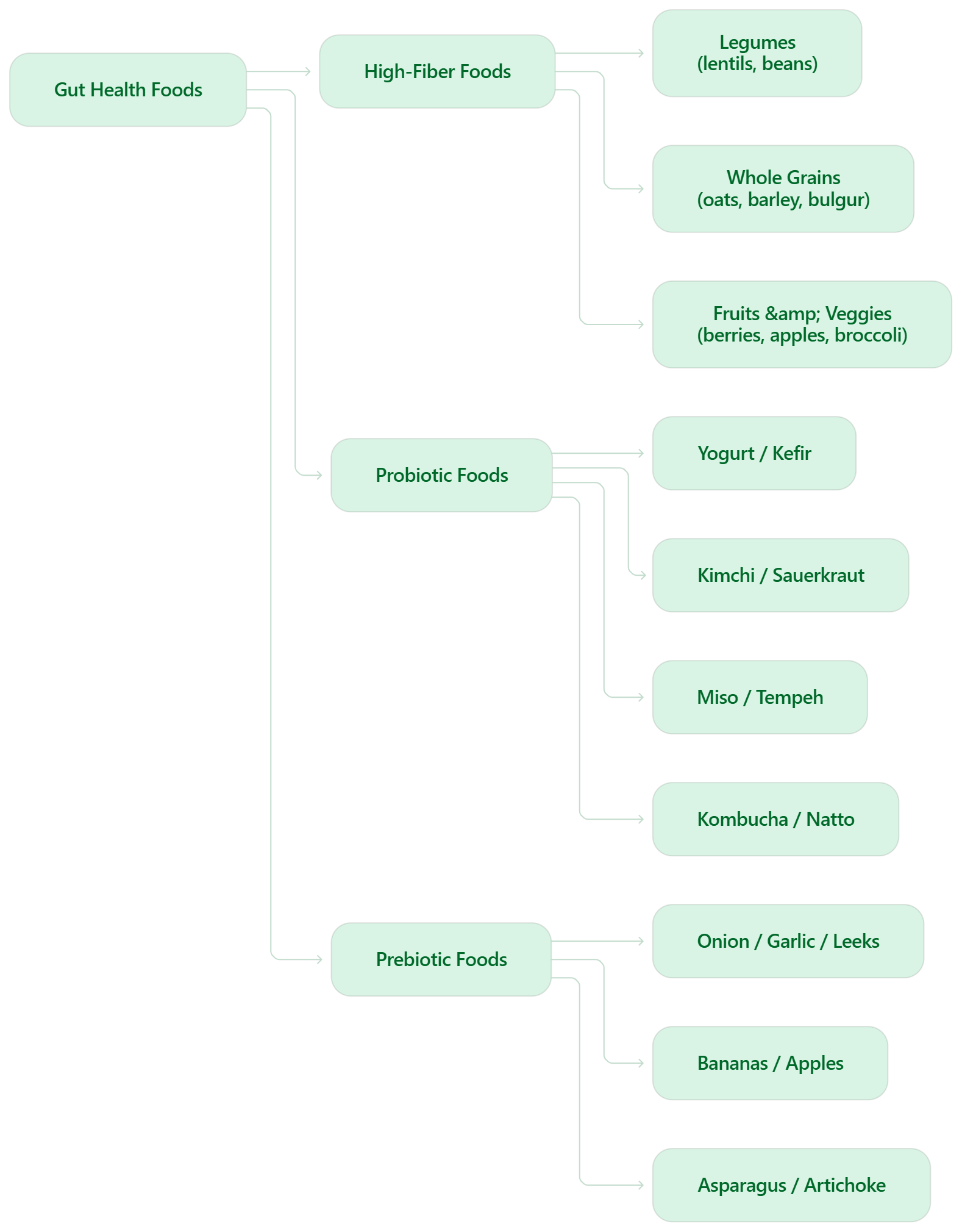
Most gut-friendly foods fall into three main groups. Each group supports your gut in a different way.
1. Fiber-Rich Foods
Vegetables, fruits, beans, whole grains, nuts, and seeds provide fiber that supports good gut bacteria.
2. Probiotic Foods
Fermented foods like yogurt, kefir, kimchi, and sauerkraut contain live cultures.
3. Prebiotic Foods
Foods like garlic, onions, oats, and bananas contain fibers that feed beneficial bacteria.
Now let us explore the best foods that improve gut health and how they can fit into your daily meals.
Fiber-Rich Foods That Improve Gut Health
Fiber is one of the most important parts of a gut-friendly diet.
It helps create a better environment for beneficial gut bacteria. However, many people do not get enough fiber every day.
Adding more fiber does not have to be difficult. Simple foods from your kitchen can make a big difference.
1. Lentils
Lentils are one of the best foods that improve gut health. They provide fiber, plant protein, and slow-digesting carbohydrates.
They are also affordable and easy to use. You can add them to soups, salads, or traditional meals.
2. Chickpeas
Chickpeas are rich in fiber and plant protein. They can support fullness and provide food for beneficial gut bacteria.
Try adding chickpeas to salads, hummus, or warm dishes.
3. Beans
Black beans, kidney beans, and other beans contain plenty of fiber.
They are simple foods that can support a healthier eating pattern.
4. Oats
Oats contain beta-glucan fiber. This type of fiber is linked with gut-friendly benefits.
A bowl of oats with fruit can be an easy breakfast choice.
5. Chia Seeds
Chia seeds are small but contain a large amount of fiber.
They absorb water and create a gel-like texture. You can add them to yogurt, smoothies, or oatmeal.
6. Flaxseeds
Flaxseeds provide fiber and plant compounds. Ground flaxseeds are easier for your body to use.
7. Almonds
Almonds provide fiber, healthy fats, and important nutrients.
A small handful can make a simple snack.
8. Walnuts
Walnuts contain fiber and plant nutrients. They are another simple addition to a balanced diet.
9. Raspberries
Raspberries are among the fruits with higher fiber content.
They add natural sweetness while providing useful plant compounds.
10. Apples
Apples contain pectin, a type of soluble fiber.
Eating apples with the skin provides more fiber.
Simple Tip:
Increase fiber slowly. Adding too much fiber quickly may cause discomfort. Drink enough water as you increase fiber intake.
Prebiotic Foods That Improve Gut Health
Prebiotic foods contain special types of fiber. These fibers become food for beneficial gut bacteria.
They are different from probiotics. Instead of adding bacteria, prebiotics help the bacteria already living in your gut.
11. Garlic
Garlic is a simple food with strong flavor and prebiotic benefits. It contains compounds that can support good gut bacteria.
You can add garlic to vegetables, soups, sauces, and daily meals.
12. Onions
Onions contain prebiotic fibers such as inulin. They are easy to include in many recipes.
Raw or cooked onions can add both flavor and nutrients.
13. Bananas
Bananas are a popular fruit and a convenient snack. Slightly green bananas contain more resistant starch.
This type of carbohydrate can support gut bacteria.
14. Asparagus
Asparagus contains prebiotic fibers that help feed beneficial bacteria.
It can be roasted, grilled, or added to salads.
15. Barley
Barley contains soluble fiber. It can be added to soups, bowls, and warm meals.
16. Leeks
Leeks belong to the same family as onions and garlic. They contain fibers that support gut bacteria.
17. Chicory Root
Chicory root is naturally high in inulin. It is often used as a source of prebiotic fiber.
18. Green Peas
Green peas provide fiber and plant nutrients. They are easy to add to rice, soups, and meals.
19. Sweet Potatoes
Sweet potatoes contain fiber and plant compounds. They are a filling addition to balanced meals.
20. Artichokes
Artichokes are rich in fiber. They are especially known for their natural inulin content.
Probiotic Foods That Improve Gut Health
Probiotic foods contain live cultures. These foods can add beneficial microorganisms to your diet.
However, not every fermented food contains live cultures. Always check labels when buying packaged products.
21. Plain Yogurt
Plain yogurt with live cultures is one of the easiest probiotic foods to enjoy.
You can eat it with fruits, nuts, or oats for a simple meal.
22. Kefir
Kefir is a fermented milk drink. It usually contains several types of live cultures.
23. Kimchi
Kimchi is a fermented vegetable dish. It contains live bacteria and plant nutrients.
24. Sauerkraut
Sauerkraut is fermented cabbage. When unpasteurized, it may contain live cultures.
25. Miso
Miso is a fermented soybean paste. It is commonly used in soups and sauces.
26. Tempeh
Tempeh is fermented soybeans pressed into a firm food. It provides protein and fermentation benefits.
27. Natto
Natto is a traditional fermented soybean food. It has a strong taste and unique texture.
28. Kombucha
Kombucha is a fermented tea drink. It is popular among people looking for fermented food choices.
29. Fermented Pickles
Naturally fermented pickles can provide live cultures. Regular vinegar pickles may not have the same benefit.
30. Traditional Fermented Vegetables
Other fermented vegetables can also be part of a gut-friendly diet when they contain live cultures.
50 Best Foods That Improve Gut Health Ranked
The following table shows popular gut-friendly foods and their main benefits. Values can change depending on preparation methods.
| Food | Category | Main Gut Benefit | Easy Way To Eat |
|---|---|---|---|
| Lentils | Fiber + Prebiotic | Supports beneficial bacteria with fiber | Soups and salads |
| Chickpeas | Fiber + Prebiotic | Provides plant fiber | Hummus and meals |
| Black Beans | Fiber | Helps increase daily fiber intake | Rice bowls |
| Kidney Beans | Fiber | Supports digestive health | Curries and salads |
| Oats | Prebiotic Fiber | Provides beta-glucan fiber | Breakfast bowls |
| Chia Seeds | Fiber | Rich source of soluble fiber | Smoothies and yogurt |
| Flaxseeds | Fiber | Adds plant-based fiber | Oatmeal topping |
| Almonds | Fiber | Supports a balanced diet | Healthy snack |
| Walnuts | Fiber + Healthy Fats | Provides plant nutrients | Snack or topping |
| Raspberries | Fruit Fiber | High fiber fruit choice | Fresh or frozen |
| Apples | Prebiotic Fiber | Contains pectin fiber | Daily snack |
| Garlic | Prebiotic | Feeds beneficial bacteria | Cooking ingredient |
| Onions | Prebiotic | Contains inulin fiber | Soups and meals |
| Bananas | Prebiotic | Provides resistant starch | Quick snack |
| Asparagus | Prebiotic | Supports gut bacteria | Roasted side dish |
| Yogurt | Probiotic | Contains live cultures | Breakfast or snack |
| Kefir | Probiotic | Provides fermented cultures | Drink or smoothie |
| Kimchi | Probiotic | Fermented vegetable source | Side dish |
| Sauerkraut | Probiotic | Fermented cabbage food | Sandwich topping |
| Tempeh | Probiotic | Fermented protein source | Cooked meals |
More Foods That Improve Gut Health (31–50)
The first 30 foods covered fiber, prebiotics, and probiotics. However, many other foods can support a balanced gut-friendly diet.
31. Broccoli
Broccoli provides fiber and plant compounds. It is an easy vegetable to add to lunch or dinner.
32. Spinach
Spinach contains fiber and important nutrients. Add it to eggs, salads, or smoothies.
33. Kale
Kale is a leafy green vegetable with fiber. It can support a diet rich in plant foods.
34. Cabbage
Cabbage contains fiber and can be eaten raw or cooked. It is also the base of fermented foods like sauerkraut.
35. Brussels Sprouts
Brussels sprouts contain fiber and plant nutrients. Roasting them can make them easier to enjoy.
36. Avocado
Avocado provides fiber and healthy fats. It can make meals more satisfying.
37. Pears
Pears contain soluble fiber. Eating them with the skin provides more fiber.
38. Blueberries
Blueberries contain plant compounds and fiber. They are easy to add to yogurt or oatmeal.
39. Strawberries
Strawberries provide fiber and natural sweetness. They are a simple fruit choice for daily meals.
40. Sweet Potatoes
Sweet potatoes contain fiber and resistant starch. They work well as a filling side dish.
41. Brown Rice
Brown rice contains more fiber than white rice. It can be part of a balanced meal.
42. Quinoa
Quinoa provides fiber and plant protein. It works well in salads and bowls.
43. Green Peas
Green peas contain fiber and plant nutrients. They are easy to include in many dishes.
44. Mushrooms
Mushrooms contain compounds that may support a healthy gut environment.
45. Pumpkin
Pumpkin provides fiber and nutrients. It can be added to soups, oats, and baked foods.
46. Carrots
Carrots contain fiber and plant compounds. They are a simple snack or meal ingredient.
47. Beets
Beets provide fiber and natural plant nutrients. They can be eaten roasted or added to salads.
48. Green Tea
Green tea contains plant compounds called polyphenols. These compounds may support a healthy gut environment.
49. Dark Chocolate
Dark chocolate with high cocoa content contains polyphenols. Enjoy it in moderate amounts.
50. Extra Virgin Olive Oil
Extra virgin olive oil contains healthy fats and plant compounds. It can be used in salads and cooking.
Foods That Improve Gut Health for Weight Loss
Many people want better digestion and healthy weight management at the same time. The good news is that many gut-friendly foods can support both goals.
High-fiber foods often take longer to digest. Therefore, they may help you feel full for a longer time.
Choose More Fiber-Rich Foods
Beans, lentils, oats, fruits, and vegetables provide fiber. They can help create satisfying meals.
You can also read our guide about
foods high in fiber
to find more options.
Add Protein With Gut-Friendly Foods
Protein helps build balanced meals. Yogurt, eggs, fish, beans, and lentils are useful choices.
For more ideas, explore our guide on
high protein foods
.
Do Not Forget Healthy Fats
Foods like avocado, nuts, seeds, and olive oil provide healthy fats. They can improve meal satisfaction.
Best Foods That Improve Digestion Naturally
Digestive comfort is different for everyone. However, some foods are commonly chosen because they are gentle and nutrient-rich.
-
Oats:
Provide soluble fiber and make a simple breakfast. -
Bananas:
Easy to digest and provide prebiotic fiber. -
Yogurt:
May provide live cultures when it contains active bacteria. -
Vegetables:
Provide fiber and plant nutrients. -
Whole grains:
Help increase daily fiber intake.
Also, remember that eating slowly and drinking enough water can support comfortable digestion.
7-Day Gut Health Meal Plan Example
A healthy gut diet does not need complicated recipes. Simple meals can work well.
Day 1
Breakfast: Oats with yogurt and berries.
Lunch: Lentil soup with vegetables.
Dinner: Brown rice with beans and salad.
Day 2
Breakfast: Greek yogurt with chia seeds.
Lunch: Chickpea salad.
Dinner: Grilled vegetables with fish.
Day 3
Breakfast: Banana oatmeal.
Lunch: Bean bowl with vegetables.
Dinner: Chicken with sweet potato and greens.
Day 4
Breakfast: Smoothie with berries and flaxseeds.
Lunch: Vegetable soup.
Dinner: Quinoa with roasted vegetables.
Day 5
Breakfast: Eggs with spinach.
Lunch: Lentil salad.
Dinner: Salmon with vegetables.
Day 6
Breakfast: Yogurt with fruit.
Lunch: Brown rice bowl.
Dinner: Beans with vegetables.
Day 7
Breakfast: Oats with nuts.
Lunch: Chickpea meal.
Dinner: Vegetable-rich family meal.
Foods to Limit for Better Gut Health
A healthy gut diet is not only about adding good foods. It is also about noticing foods that may cause problems when eaten too often.
Everyone reacts differently. A food that creates discomfort for one person may not affect another person.
Highly Processed Foods
Many processed foods contain less fiber compared with whole foods. A diet with fewer fiber sources may provide less support for good gut bacteria.
Too Much Added Sugar
Large amounts of added sugar may affect the balance of bacteria in your gut. Choosing fruits instead of sugary snacks can be a simple change.
Low-Fiber Eating Patterns
A diet with very little fiber may not provide enough food for beneficial bacteria. Adding vegetables, fruits, beans, and whole grains can help.
Too Much Alcohol
Heavy alcohol intake may irritate the digestive system. Drinking less can support better overall health.
Common Gut Health Mistakes
Building a healthier gut takes time. Many people make small mistakes without realizing it.
Eating Only One Healthy Food
Eating yogurt every day is helpful, but your gut needs variety. Different foods provide different types of nutrients.
Increasing Fiber Too Quickly
Adding a lot of fiber overnight may cause gas or bloating. Increase fiber slowly instead.
Ignoring Food Variety
Eating the same foods every day limits the variety of nutrients your gut receives.
Forgetting Water Intake
Fiber works better when you drink enough fluids. Water helps your digestive system handle fiber comfortably.
Foods That Improve Gut Health: Frequently Asked Questions
What are the best foods that improve gut health?
The best foods that improve gut health include beans, lentils, oats, vegetables, fruits, yogurt, kefir, kimchi, and other fermented foods.
How can I improve my gut health naturally?
You can improve gut health naturally by eating more fiber-rich foods, adding fermented foods, drinking enough water, and choosing a variety of plants.
Are probiotics or prebiotics better for gut health?
Both have different roles. Probiotics add live cultures, while prebiotics provide food for beneficial bacteria already in your gut.
How much fiber should I eat every day?
Most adults should aim for a higher fiber intake through fruits, vegetables, beans, nuts, seeds, and whole grains. Individual needs can vary.
Can gut health foods reduce bloating?
Some people feel better after adding more fiber and fermented foods. However, sudden diet changes may temporarily increase bloating.
Is yogurt good for gut health?
Plain yogurt with live cultures can be a useful probiotic food. Check the label for active cultures.
What foods feed good gut bacteria?
Foods that feed good gut bacteria include oats, onions, garlic, bananas, beans, and other high-fiber foods.
Can I improve my gut health in one week?
You can start making positive changes within one week. However, creating long-term habits usually takes more time.
Final Thoughts on Foods That Improve Gut Health
Your gut health journey does not need to be complicated.
Small daily choices can create meaningful changes over time. Adding more plants, fiber, and fermented foods is a simple place to begin.
Remember, the goal is not a perfect diet. The goal is a balanced diet that supports your body.
Start with one change today. Add a serving of vegetables. Try a fermented food. Choose whole foods more often.
A healthier gut begins with simple choices repeated every day.
For more nutrition guides, explore our articles on
foods high in fiber,
high protein foods,
and other evidence-based nutrition topics.
Sources and References
Nutrition information and food data may vary depending on preparation methods and food types. We use trusted nutrition resources for general guidance.