
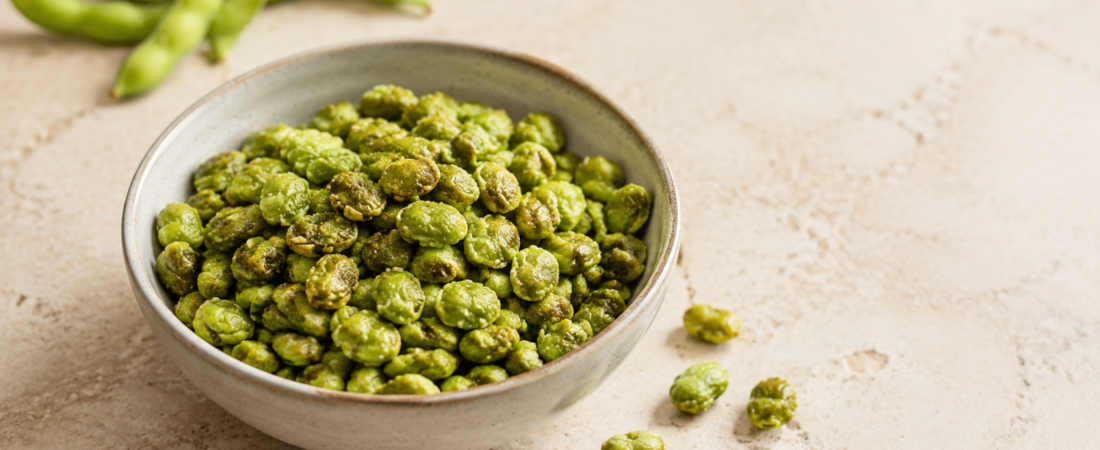
Dry roasted edamame is a crunchy soybean snack that can deliver a large amount of plant protein and fiber in a small serving. Current product labels show that a typical 30 g serving provides about 110–130 calories, 13–14 g protein, and 5–6 g fiber. The exact numbers depend on the brand, oil, seasoning, and serving size, so the package label—not a single generic number—is the best source for the product you are eating.
Dry Roasted Edamame Nutrition: Quick Answer
For a common 30 g serving (roughly 1/3 cup), dry roasted edamame usually falls in this range:
- Calories: 110–130 kcal
- Protein: 13–14 g
- Carbohydrate: about 6–9 g
- Fiber: about 5–6 g
- Fat: about 4–5 g
- Sodium: from 0 mg in an unsalted product to more than 200 mg in a salted product
These are label-based comparison values, not a universal recipe. A flavored variety may contain different oil, sugar, sodium, or serving size.
Dry Roasted Edamame Nutrition Facts Compared
The table below compares three current product examples using the same 30 g serving basis. It shows why checking the actual label matters.
| Example | Serving | Calories | Protein | Carbs | Fiber | Fat | Sodium |
|---|---|---|---|---|---|---|---|
| Unsalted dry roasted edamame label | 30 g | 110 | 13 g | 6 g | 5 g | 4 g | 0 mg |
| Sea-salt roasted edamame label | 30 g | 120 | 14 g | 8 g | 6 g | 5 g | 230 mg |
| Lightly salted roasted edamame label | 30 g | 130 | 14 g | 9 g | 6 g | 5 g | 140 mg |
Label information can change. Check the package in your hand when you need product-specific values.
What Is Dry Roasted Edamame?
Edamame are young soybeans harvested before they fully mature. Fresh or frozen edamame is usually boiled or steamed and remains soft. Dry roasted edamame has much of its water removed during roasting, giving it a crisp texture and concentrating its nutrients into a lighter portion by weight.
Some products contain only soybeans. Others add salt, oil, or flavoring. This difference explains why two bags that look similar can have different calorie, fat, and sodium numbers.
Is Dry Roasted Edamame High in Protein?
Yes. The examples above contain 13–14 g of protein in a 30 g serving. That means nearly half the serving’s weight is represented by listed protein.
For context, Foodmanac’s USDA-sourced profile for prepared frozen edamame reports 11.9 g protein per 100 g. Dry roasted edamame appears much more protein-dense by weight because roasting removes water. This does not mean roasting creates protein; it means the dry snack contains less water in each gram.
If you are comparing snacks, look at both grams of protein and the serving’s calories. Foodmanac’s high-protein snacks comparison places those numbers side by side across 25 foods.
How Much Fiber Is in Dry Roasted Edamame?
A typical 30 g serving in the products compared here contains 5–6 g of dietary fiber. The U.S. Food and Drug Administration lists a Daily Value of 28 g for fiber on a 2,000-calorie diet. On that basis, 5–6 g equals roughly 18–21% of the Daily Value.
The FDA says 20% Daily Value or more is considered high for a nutrient. A product listing 6 g fiber may therefore reach the FDA’s general “high” benchmark, depending on the declared percentage and serving size. Learn how these percentages work in Foodmanac’s guide to Percent Daily Value.
How Many Calories Are in Dry Roasted Edamame?
Most 30 g examples fall near 110–130 calories. Portion size is the detail most likely to cause confusion. A small bag may contain more than one serving, and a bowl poured without measuring can easily exceed 30 g.
- 30 g: about 110–130 calories
- 60 g: about 220–260 calories
- 90 g: about 330–390 calories
The FDA notes that all calories and nutrient amounts on a Nutrition Facts label refer to the stated serving. If you eat two servings, the listed calories and nutrients should be doubled. See Foodmanac’s explanation of nutrition per 100 g versus per serving for a practical comparison.
Dry Roasted Edamame Carbs and Net Carbs
The products compared above list about 6–9 g total carbohydrate and 5–6 g fiber per 30 g serving. Some shoppers subtract fiber from total carbohydrate to estimate “net carbs,” but net carbs is not a nutrient that the FDA requires on the standard Nutrition Facts label. If a package advertises net carbs, verify the total carbohydrate and dietary fiber lines yourself and compare products on equal serving sizes.
Dry Roasted vs Cooked Edamame
| Feature | Dry roasted edamame | Prepared frozen edamame |
|---|---|---|
| Texture | Dry and crunchy | Soft and moist |
| Water content | Low | High |
| Protein density by weight | Higher because water has been removed | Lower per gram because the food contains more water |
| Sodium | Varies widely with seasoning | Very low when prepared without salt; Foodmanac’s USDA record lists 6 mg per 100 g |
| Best use | Portable crunchy snack or topping | Side dish, salad, bowl, or warm snack |
Neither form is automatically “better.” The useful choice depends on whether you want portability and crunch or a larger, water-rich portion with more flexibility in a meal.
What to Check Before You Buy
- Serving size: Compare equal gram weights, not just “one serving.”
- Protein: Current examples provide 13–14 g per 30 g.
- Fiber: Look for the listed grams and % Daily Value.
- Sodium: Unsalted and seasoned products can differ by more than 200 mg per serving.
- Added sugar: Plain sea-salt products may list none, while flavored varieties can differ.
- Ingredients: Check whether the product adds oil, sweeteners, or flavoring.
- Allergens: Edamame is soy. People with a soy allergy should avoid it and follow the product’s allergen statement.
Ways to Use Roasted Edamame
- Eat a measured portion as a crunchy snack.
- Add it to a trail mix with nuts and unsweetened dried fruit.
- Use it instead of croutons on a salad.
- Sprinkle it over a grain bowl for texture.
- Combine it with fruit for a snack containing protein, fiber, and carbohydrate.
- Choose an unsalted version when you want more control over sodium.
Frequently Asked Questions
How much protein is in dry roasted edamame?
Current product labels commonly list 13–14 g of protein per 30 g serving. Check your package because recipes and serving sizes vary.
How many calories are in 1/4 cup of dry roasted edamame?
It depends on the weight represented by 1/4 cup. Product labels often list about 110–130 calories for a serving near 30 g. For the most accurate answer, use the gram weight and calories printed on the specific package.
Is roasted edamame a high-fiber snack?
Many products provide 5–6 g fiber per 30 g. Six grams is about 21% of the FDA’s 28 g Daily Value, which reaches the agency’s general 20% benchmark for a nutrient being high per serving.
Is dry roasted edamame low carb?
Compared with many cracker-style snacks, some products have relatively little available carbohydrate because much of their total carbohydrate is fiber. However, “low carb” can mean different things to different people. Use the total carbohydrate and fiber lines on the label and consider your overall eating pattern.
Is dry roasted edamame gluten-free?
Plain edamame does not contain gluten, but seasoning and shared processing facilities can change allergen or cross-contact information. Check the package if you need a certified gluten-free product.
Can you eat dry roasted edamame every day?
It can fit into many eating patterns, but variety still matters. Consider portion size, sodium, your overall diet, and any soy allergy or individualized medical advice.
Bottom Line
Dry roasted edamame is a compact, crunchy snack with roughly 13–14 g protein and 5–6 g fiber in many 30 g servings. Calories usually fall around 110–130, while sodium varies sharply between unsalted and seasoned products. Compare labels on the same gram basis and choose the version that fits your priorities.
Sources & Data Notes
- Foodmanac: Edamame, frozen, prepared nutrition facts, sourced from USDA FoodData Central (FDC 168411).
- USDA FoodData Central: Edamame, frozen, prepared.
- FDA: How to Understand and Use the Nutrition Facts Label.
- Product-label examples linked directly in the comparison table. Product formulations can change.
This article provides general nutrition information and is not individualized medical or dietary advice.